Published March 11, 2026
Some of the most persistent forms of pollution affecting the Grand River, Michigan’s longest and most populated watershed, can’t be seen with the naked eye. Micro- and nano plastics, or MNPs, are microscopic fragments and fibers that travel widely through the air, soil, and in water, and have been found in the human body in organs including the brain and heart. Unlike larger pieces of plastic that might entangle a seal or turtle, or get ingested by marine animals mistaking it for food, MNPs are relatively invisible, and the harms they cause internal, making them easier to overlook.
But seeing beneath the surface, or making the invisible visible, is what Michigan-based artist Avery Williamson hopes to accomplish with an upcoming art installation. Williamson has partnered with Michigan State University (MSU) to develop an exhibit reflecting the science and community of the Grand River with a focus on micro- and nano plastics. The project will coincide with the installation of a bubble barrier in Lansing, the first of its kind in the U.S.
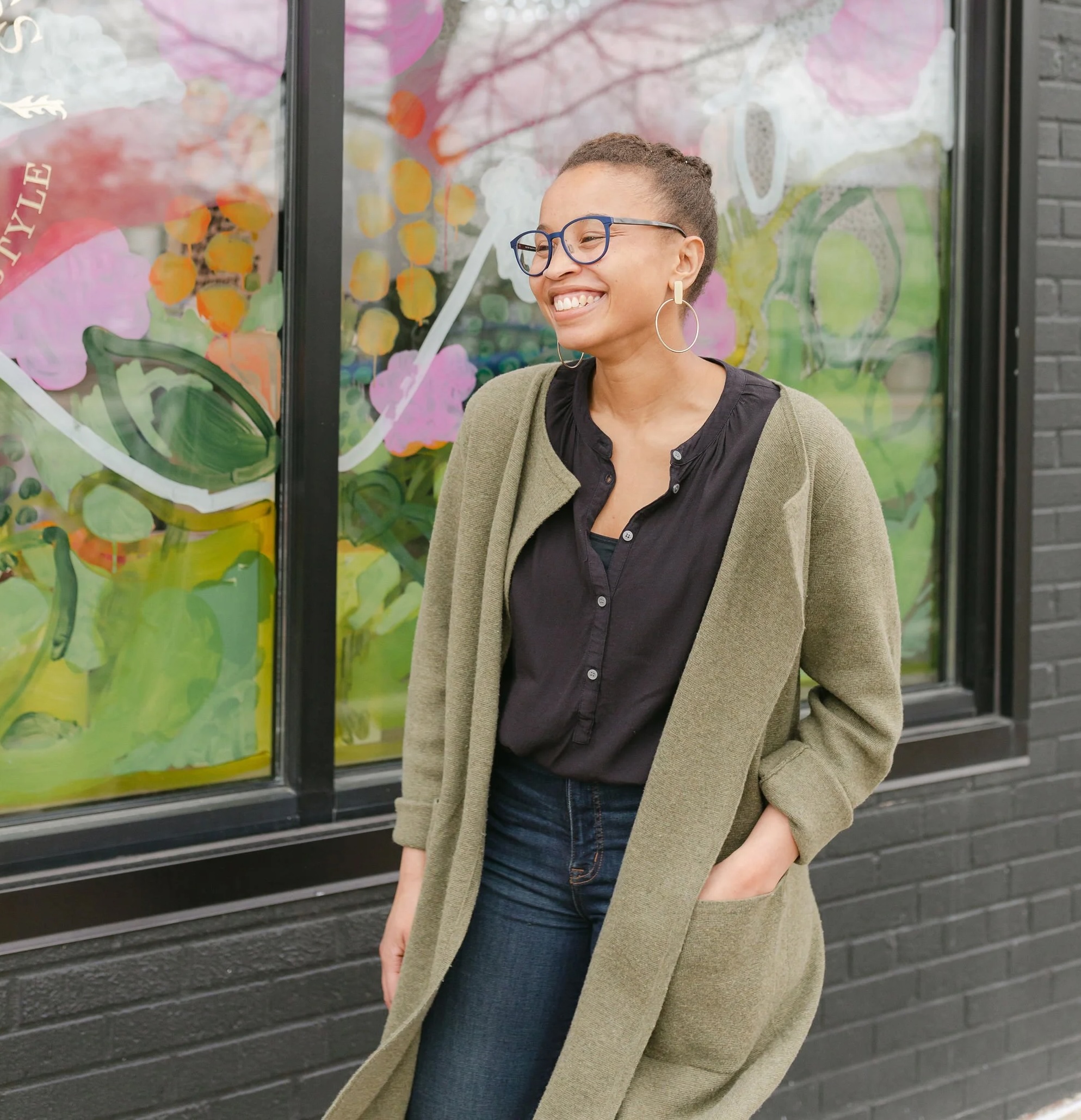
Avery's artwork has been featured in The New York Times, Harper's Magazine, and the Guardian News. Courtesy PHOTO.
“I love the challenge of thinking about how to make something feel relevant and interesting to the public,” Williamson said. “I think an interesting narrative, or real attentiveness to what matters most to someone makes things sticky. People feel like they’re an actor in this story, not just an audience.”
Although the details of the bubble barrier art installation are still being finalized, the community engagement component remains central, as does the collaborative approach of creative placemaking, or the practice of using art to make people care more about community issues.
Williamson is no stranger to community-based artwork, having completed a project in 2024 with the University of Michigan’s Concussion Center. Here, she worked alongside patients recovering from concussions, using murals as visual representations of what a concussion feels like and how a concussed brain heals. It was during a conference workshop for the concussion project that she met MSU Associate Professor and director of research for the Center for Interdisciplinary Research, Collaboration, Learning, and Engagement (CIRCLE), Lissy Goralnik, who brought her on to the bubble barrier art installation project.
“I was blown away by the method she [Avery] created that invites people to interpret their stories with image and color, which adds a layer of meaning that felt important,” Goralnik said of her first time meeting Williamson. Through a series of interviews and collaborative art exercises, Williamson asked concussion patients to translate their recovery experiences into a visual library of colors, marks, and symbols, all of which shaped the final mural installation.
“Not everyone communicates super well with language. Emotions are hard to capture with words,” Goralnik continued. “When we practiced with Avery’s method, it was a transformative experience for me, and for the other participants that I practiced with during the workshop.”
For the art installation project, Williamson will carry out her own community research and partner with Goralnik’s team to host pop-up events that elicit community members’ stories about their relationships with place, water, and the Grand River.
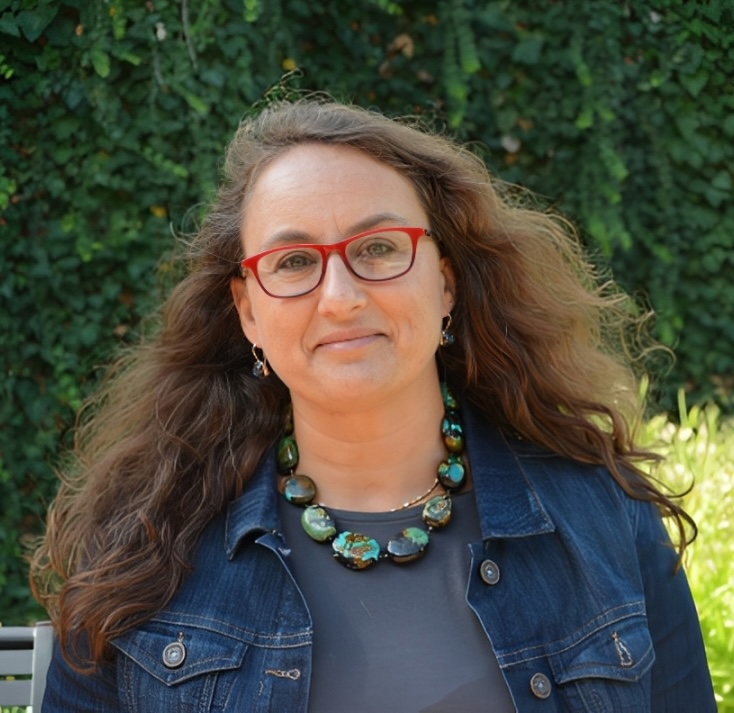
Lissy Goralnik, associate professor in environmental studies and community engagement.
“I feel like there’s opportunities when we’re talking about a present issue, like microplastics, to think about, how did we get here? What is the history of the Grand River in this region? How do we invite people who have all these different relationships and memories to water and to this place, to think about the bubble barrier as something they can have an opinion about—that they can be invested in,” Williamson said.
Williamson and Goralnik hope this project will not only invite deeper conversations with the communities who live in the Grand River watershed, but also showcase the nuances of plastic pollution that extend far beyond picking up trash and putting it in the bin. Yes, there is visible debris in our waterways, but there are also invisible threats to human health that are introduced from everyday activities like washing dishes (specifically plastic containers) or doing a load of laundry.
“It starts with reducing our use of plastic in the first place,” Goralnik said. “It would be a dream if we didn’t need a bubble barrier at some point, right? That’s probably not a reality. But change starts by altering our dependence on single-use items, while we also work to shift the systems that necessitate our cultural dependency on plastic. For me, this process starts with care. How do we care about our landscapes, our bodies, and our communities? How can that care inform the ways we live in the world?” Art is one way to invite people to care.
A completion date has not yet been announced for the art installation or the Lansing bubble barrier. According to Brendan Cousino of LimnoTech, the water science and engineering firm collaborating on the barrier project, design is expected to be completed for contractor bidding in early 2027, with construction planned during the 2027 construction season.
The world's first long-term bubble barrier was installed in Amsterdam in 2019 by The Great Bubble Barrier, a Dutch company. There are currently three systems in the Netherlands and one in Portugal.
Led by the MSU Water Alliance, additional partners for the Lansing bubble barrier project include Grand Valley State University (GVSU), Meijer, the Michigan Department of Environment, Great Lakes, and Energy (EGLE), Michigan Waterways Stewards, the Michigan Department of Natural Resources (MDNR), and the City of Lansing.
Story by Aja Witt