
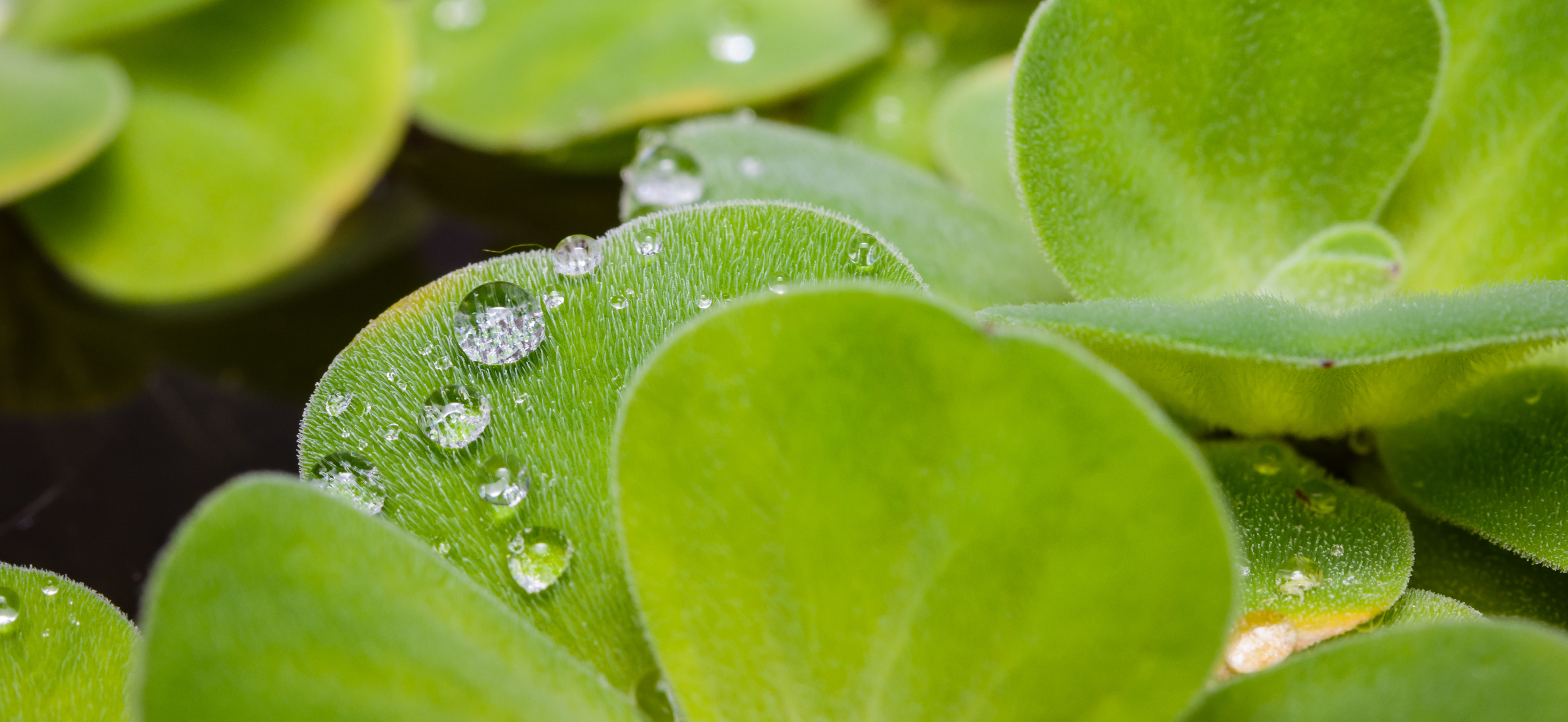
Close-up of duckweed floating in a pond.
Katherine McCullen is a PhD student in the Department of Biosystems & Agricultural Engineering. With a bachelor’s degree in plant biology, Katherine joined the WaterCube NRT Fellowship Program in 2025, drawn to its emphasis on interdisciplinary science and collaborative problem-solving.
Katherine's research involves the use of duckweed, an aquatic plant, as a phytoremediator, removing contaminants from the environment. Working with Associate Professor Dawn Dechand, she specifically investigates how the plant can remove the antibiotic sulfamethoxazole.
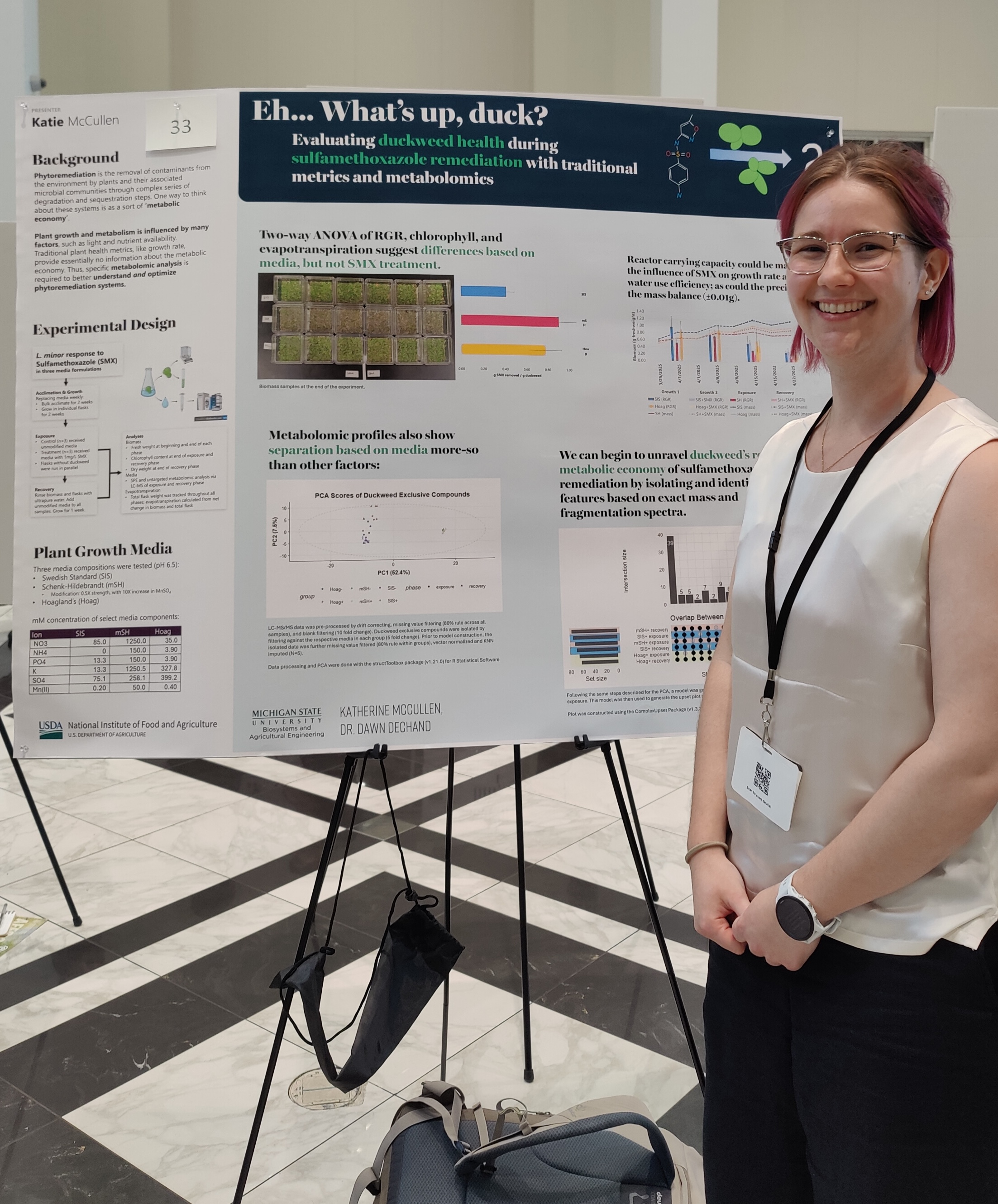
Katherine presenting her research at the American Ecological Engineering Society Annual Meeting.
“There are a lot of people who use duckweed in their research, but each method is slightly different. Because it’s a plant, you can culture it in many ways, making it somewhat difficult to compare studies,” McCullen said. “The contaminant I looked at for my thesis, the antibiotic sulfamethoxazole, has been studied in a handful of other papers using the duckweed sulfamethoxazole system, so it’s a great model system.”
McCullen’s work is purely lab-based and she spent much of the summer of 2025 completing her master’s thesis. While her research does not involve fieldwork, it builds on prior studies that included sampling duckweed in natural environments like ponds and slow-moving rivers.
During her time in the WaterCube NRT Program, McCullen has gained a broader perspective about her research. Rooted in biochemistry, she now sees how her work connects to water science and big data, and is looking forward to engaging with the social science components of the program.
“If you’re even remotely interested in how to do convergent, interdisciplinary science—which is something that often gets mentioned in classes, that we need to work together in communication and across educational boundaries—this is a really great way to get more involved with that,” McCullen said of the WaterCube.