
MSU packaging assistant professor Yoorae Noh explains the human health implications of micro- and nanoplastics
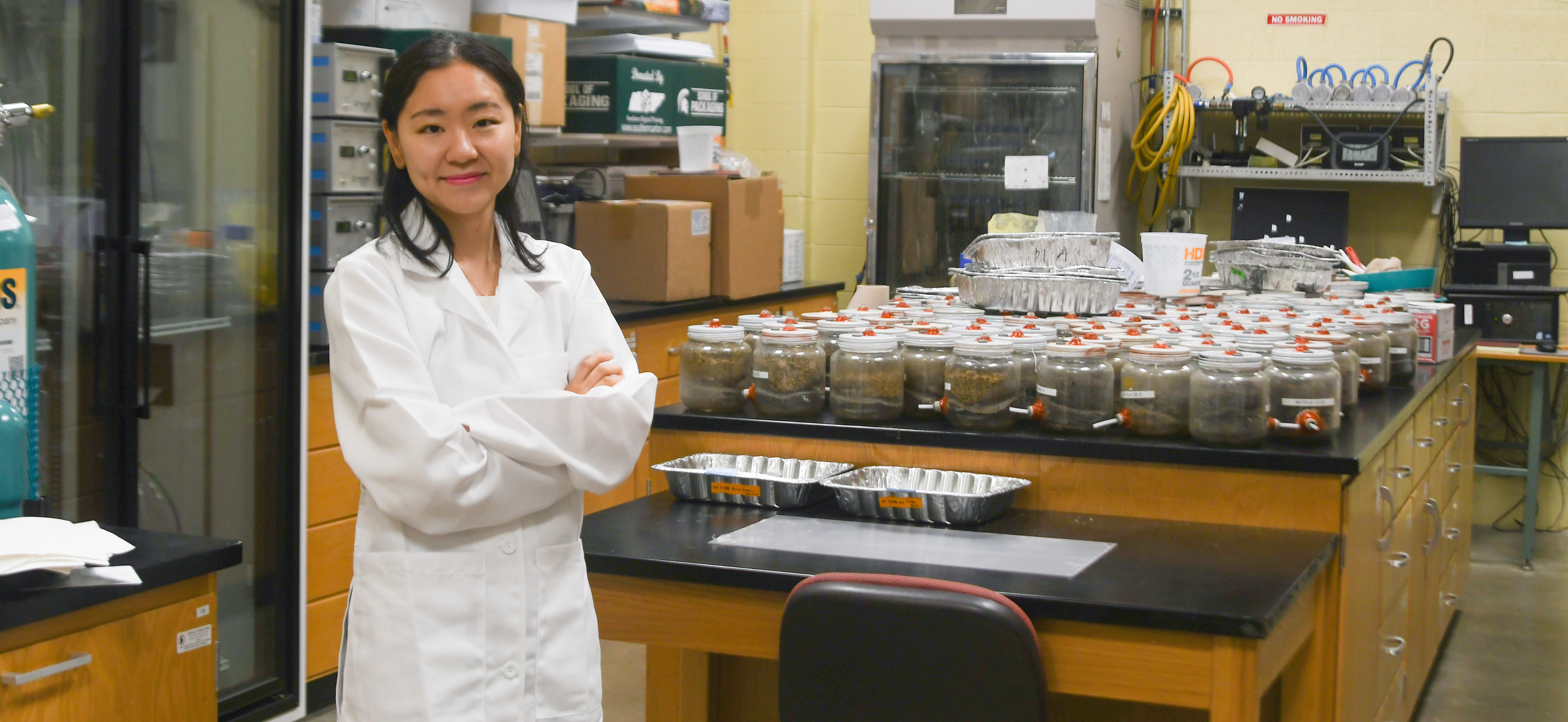
Michigan State University Assistant Professor Yoorae Noh says microplastics remain a challenge, and progress requires coordinated action.
Published January 29, 2026
Plastic was originally created as an eco-friendly alternative to ivory, which comes from the tusks and teeth of large mammals like elephants. In 1869, American inventor John Wesley Hyatt invented the first modern synthetic plastic, celluloid, enabling the mass production of consumer goods. Today, plastics are indispensable, being used in medical packaging, emergency supplies, textiles, infrastructure, military equipment, and car parts. But their widespread use has created a major environmental problem: plastic pollution, which can contaminate water, food, and even the human body.
Dr. Yoorae Noh, an assistant professor in Michigan State University’s School of Packaging, has spent her career investigating plastics, microplastics, and the emerging concern of nanoplastics. Her research uses engineering, environmental science, and public health to track plastics from their production to disposal and environmental impact.
Understanding plastics, microplastics, and nanoplastics
Plastics are materials made from polymers, or long chains of repeating molecules called monomers. “Polymer; ‘poly’ means many and ‘Mer’ means unit. Many units are connected.” Noh said.
Common examples of plastics include polyethylene (PE) used in bags and bottles, polypropylene (PP) in food containers and bottle caps, polyvinyl chloride (PVC) in pipes and blood bags, and polystyrene (PS) in foams cups and packaging materials.
Microplastics are solid plastic pieces that do not dissolve in water, and measure less than 5 millimeters (about the size of a pencil eraser). Nanoplastics are even smaller at less than 1 micrometer (70 to 100 times narrower than the width of a human hair).
Together, microplastics and nanoplastics (MNPs) are tiny enough to spread widely through the air we breathe, the water we drink, and in soil, making them largely unavoidable. They are introduced to the environment in two ways: primary microplastics are intentionally manufactured in products like facial scrubs or toothpaste that contain microbeads. Secondary microplastics are created when larger plastic items like bags or bottles breakdown overtime. Sun, wind, and rain can all contribute to cracking or fragmentation of plastics, as well as human activities like washing synthetic clothes which releases plastic particles into wastewater.
A brief history of plastic
Early plastics, like Bakelite, became popular for kitchenware and electrical equipment during the early 1900s because of its heat resistance. Later, during World War II, the production of nylon and other plastics rapidly increased because of military needs (parachutes and aircraft canopies) and industry applications. After the war, the commercial use of plastics continued to expand due to their light weight, low cost, chemical resistance, and versatility. But production has outpaced recycling and disposal.
Today, global plastic production is about 430-460 million tons per year, yet according to Noh, less than 10% of that gets recycled. The rest ends up in landfills, the environment, or is incinerated for energy.
This video was produced by 42PointSEVEN, with scriptwriting and project coordination from the MSU Water Alliance.
Environmental and human impacts
As MNPs move through ecosystems, they bind with other pollutants. “Microplastics could travel with bad friends,” Noh said. “They can easily mingle with other substances, and these substances may be volatile organic compounds, dust, or persistent organic compounds.” These particles are then ingested by marine life (plankton and fish), entering the food chain and eventually affecting humans. “The toxicity of the mixture of additives contained in the MNPs is another problem we need to consider,” Noh said.
Previous research from Noh’s lab showed that within weeks plastic products, including linear low-density polyethylene (LLDPE) films used in agriculture, can degrade into micro- and nanoscale particles. In one experiment irradiating ultraviolet (UV) stress, “within 15 days, the LLDPE film was cracked and broken, while generating detectable MNPs.” As plastics degrade, their ability to absorb other contaminants like heavy metals and toxic organic chemicals increases, making them more likely to carry pollutants into ecosystems and the human body.
The Great Lakes, particularly Lake Michigan, have been found to contain high levels of microplastics, with approximately 10,000 particles per cubic meter in offshore waters, and up to 100,000 particles per cubic meter in certain tributaries, according to a 2024 report from the Internation Joint Commission. Because millions of people in the United States and Canada rely on the Great Lakes for drinking water, recreation, and food, Noh and other researchers have begun studying human exposure to MNPs.
As far as we know, MNPs are present in at least 8 of the 12 organs examined in humans, including the brain, lungs, heart, and kidneys. But, Noh clarified, “it’s still too early” for researchers to know the exact ways MNPs are affecting the human body, if at all, but once they’re in your blood, they could be there for good. MNPs have even been found in placenta at greater levels than previously detected in blood, making this a multi-generational concern.
Regulation and policy responses
Efforts to address plastic waste are increasingly being guided by circular economy principles, which focus on using less new plastic, preventing plastic from entering the environment, and encouraging recycling and reuse. Extended Producer Responsibility (EPR) is a policy requiring manufacturers, instead of local governments and taxpayers, to manage the ‘end-of-life’ disposal of plastics and packaging. EPR in packaging applications has been adopted by California, Maine, Minnesota, Oregon, Washington, Colorado, and Maryland.
Currently, Michigan has EPR laws for electronics that require manufacturers to fund take-back programs for computers and televisions. The state also introduced several initiatives in 2025, including a Strategy Bill to coordinate research and monitoring of microplastics, a Drinking Water Bill to assess the presence of microplastics in public drinking water supplies, and a Microbeads Ban Bill that prohibits the use of microbeads in products sold in Michigan.
But legislation alone cannot solve the microplastics problem, prompting researchers to look beyond policy to the materials themselves and how plastic waste is managed.
Alternative materials and managing plastic waste
Bioplastics are used to denote plastics that are either bio-based or biodegradable. Bio-based plastics, made from renewable resources (sugarcane, corn, potato starch), are often proposed as alternatives to petroleum-based plastics. But, as Noh explained, “bio-based does not mean biodegradable.” Many bio-based plastics do not break down easily, and even certain biodegradable plastics require industrial composting conditions. Polylactic acid (PLA), a widely used bioplastic to make straws, is compostable only under controlled conditions.
And while bio-based plastics may reduce carbon emissions during their life cycle, some of them may still generate microplastics after use. Noh stated that these materials offer some benefits, but are not a complete solution to microplastic pollution.
Reducing plastic waste therefore requires multiple strategies: reducing new plastic production, limiting single-use plastics, and improving reuse and recycling systems. Individual choices, like choosing glass, metal, or silicon products can also help reduce plastic use.
Addressing plastic pollution long term
Plastic was once celebrated as a solution to environmental challenges, but now poses complex risks to ecosystems and human health. Research continues to improve understanding of micro- and nanoplastics, their pathways, and potential toxicological effects. But comprehensive solutions will require coordinated action across science, policy, industry, and the public.
“Plastics are embedded in our lives, our environment, and our bodies,” Noh said. “The challenge is ongoing, and progress depends on coordinated action at every level.”
Story by Aja Witt