
Published October 29, 2026
Dr. Maggie Williams (Civil and Environmental Engineering), Dr. Hui Li (Plant, Soil and Microbial Sciences), and Dr. Bruno Basso (Earth and Environmental Sciences) represented Michigan State University at the UN Food and Agriculture Organization (FAO) Global Conference for Actions on One Health in Agrifood Systems. The meeting took place in Rome, Italy, Sept. 21-23, 2026.
One Health recognizes that the health of people, animals, plants, and the environment are deeply connected. In agriculture, where water quality influences the soil that supports crops, the plants and animals that sustain food systems, and the environmental conditions that shape human health, these relationships are especially visible.
Several panels during the conference discussed the range of contaminants currently affecting agricultural and food production systems worldwide. These include pesticides, pharmaceuticals, antibiotic resistance genes (ARGs), per- and polyfluoroalkyl substances (PFAS), microplastics, and heavy metals.
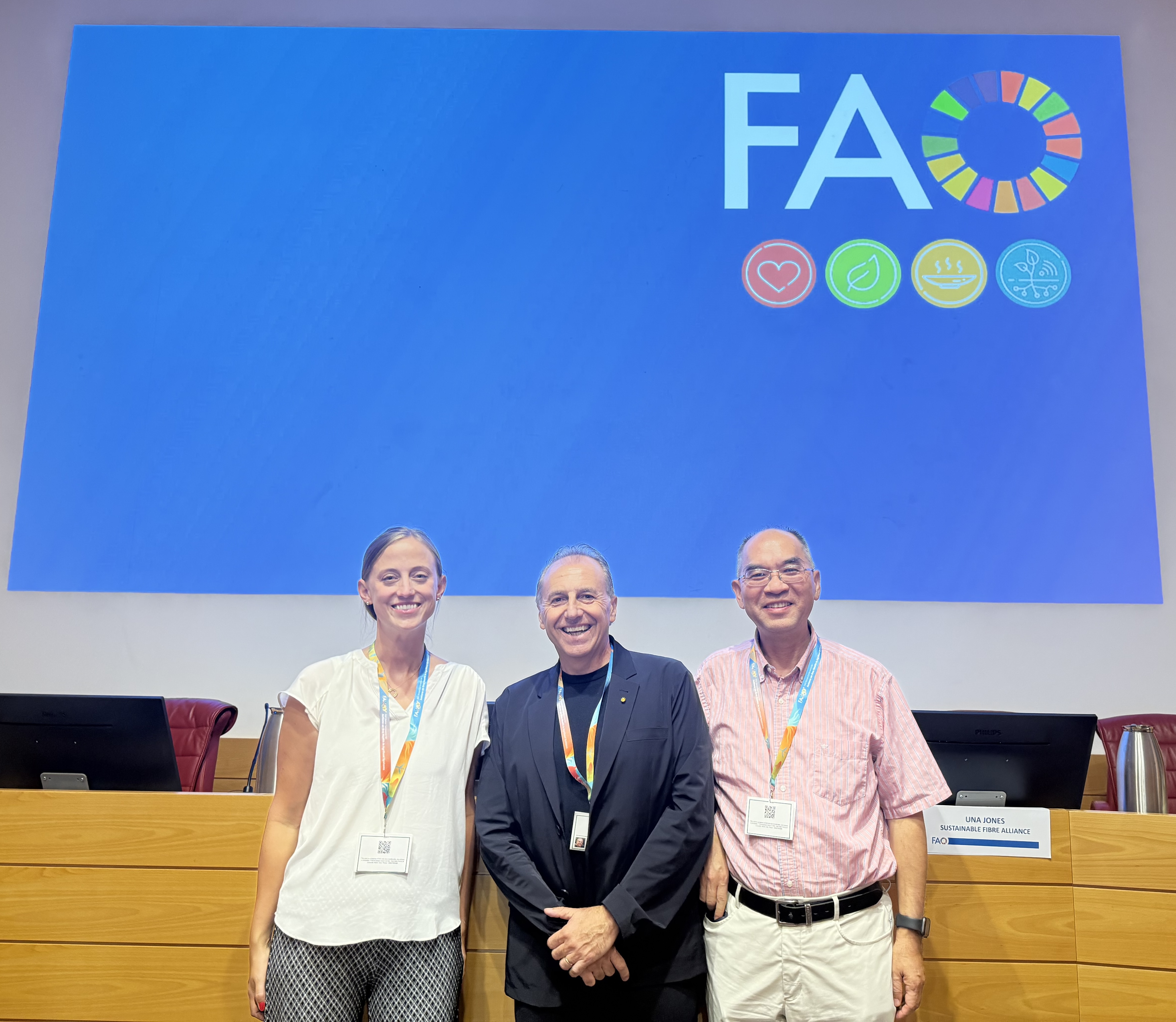
Maggie Williams, Bruno Basso, and Hui Li attend the 2026 UN FAO Conference in Rome, Italy.
Although these contaminants differ by source and behavior, they raise a common question about how their movement in our shared environment can affect health.
For Basso, the movement of these contaminants begins quite literally beneath our feet. Speaking on the panel, Soil Health: The Foundation of One Health in Agrifood Systems, he describes soil as “the shared upstream of human, animal, and plant health,” and the “one compartment of One Health we can still repair quickly and affordably.”
Around 95 percent of our food comes directly or indirectly from soil, and much of our drinking water is filtered through it. Clean soil and water support healthier plants and animals, ultimately helping to protect human health.
“People are healthier when they eat healthy food and are not exposed to contaminated water, food, and feed,” Basso said. “And both conditions start in the soil.”
At MSU, the Basso Digital Agriculture and Crop Modeling Lab uses crop and soil models, remote sensing, and artificial intelligence to identify areas within fields where nutrient loss and environmental risks are concentrated.
Basso’s research gives One Health a working example of the exposure-pathway model, tracking how nutrients, contaminants, pathogens, and other substances move from soil into plants, water, and the air.
While researchers can track how these substances move in the environment, understanding their combined effects on human health remains a major research challenge, noted Li, co-lead of the One Health Hub with the MSU Water Alliance.
“We really need more integrated research on how chemicals in water or soil affect human health directly,” he said. “For lower-level exposures to chemicals like PFAS, if there’s lifelong exposure, how does that affect health? At this point, we do not know the answer.”
Li stated that researchers have made significant progress in understanding how toxic chemicals move through the environment and water, how plants take them up, and how they accumulate in animals, but more research is needed to understand the full effects on human health.
High-dose exposures to PFAS have been linked to increased cholesterol, changes in liver function, and weakened immune systems, but far less is known about the long-term impact of trace amounts, which the majority of the population is exposed to. How do decades of low-level exposure to PFAS through food and water add up over a lifetime?
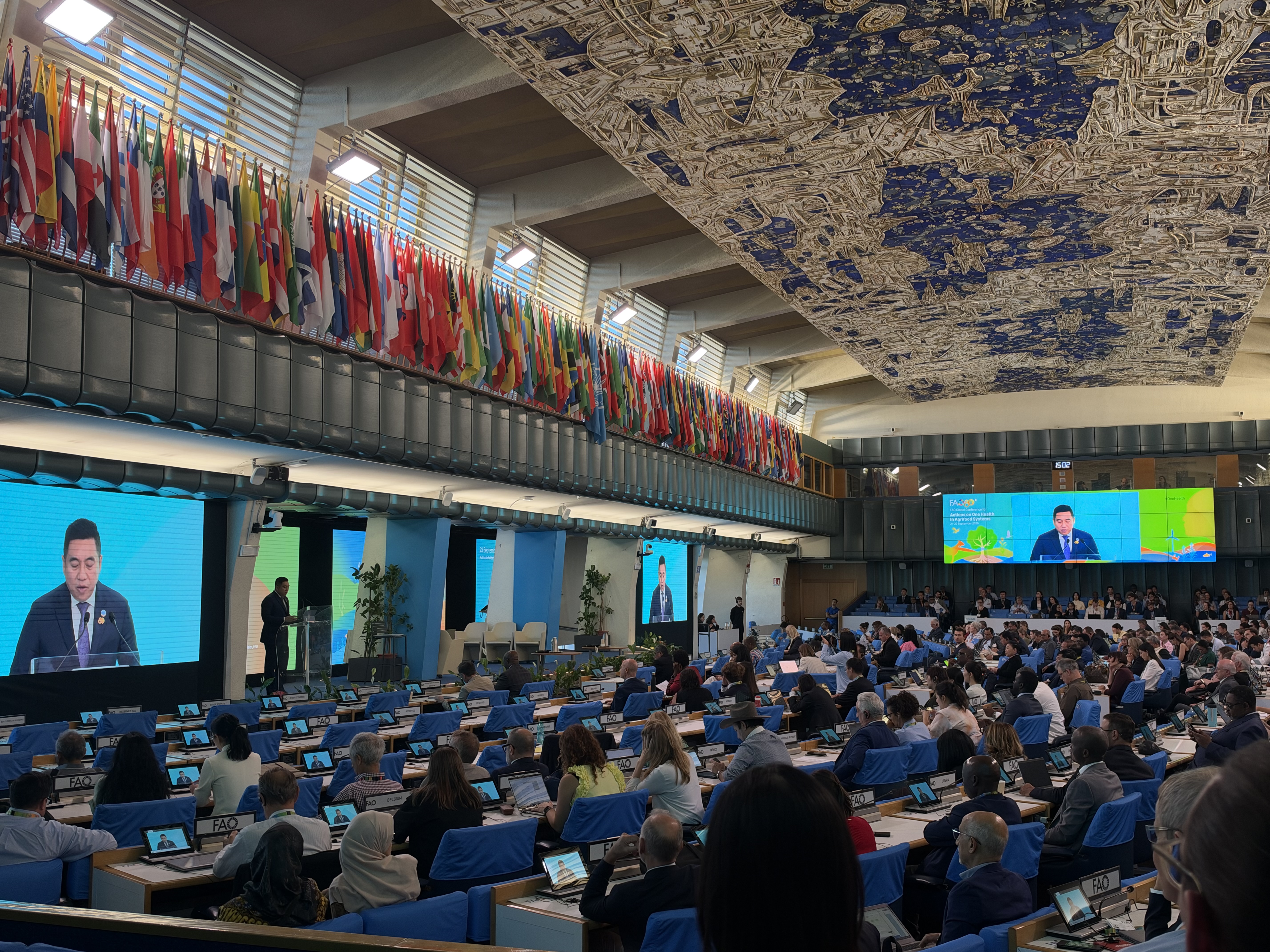
Attendees gather in the FAO Plenary Hall.
For Williams, the question shifts to how a better understanding of the connections between people, animals, plants, and the environment can help prevent health problems in the first place.
Speaking about antimicrobial resistance, she said, “We have established surveillance tools for assessing antimicrobial resistance as it relates to human health, but they are really not being utilized as much for environmental and animal health. This is a missed opportunity.”
Because antibiotics are widely used in agriculture, monitoring antimicrobial resistance in livestock and manure could help researchers identify and track the spread of drug-resistant bacteria in the food supply and environment.
These bacteria can cause foodborne illnesses and other infections that are difficult, sometimes impossible, to treat in animals and humans.
Beyond surveillance, Williams believes that strengthening our entire food system is necessary to protect human, animal, and environmental health.
“Food systems may be one of the most sustainable and direct vehicles to achieving harmonized One Health,” she said.
Like Basso, Williams agrees that animal feed is a good place to start. Safer, more nutrient-rich animal feed strengthens gut health and immunity in livestock. This helps prevent disease, reduces costs for farmers, and lowers antimicrobial use, benefiting human health.
Story by Aja Witt with Contributions from Joan Rose, Maggie Williams, Bruno Basso, and Hui Li