Published July 27, 2026
Michigan is home to more than 1,000 public beaches that draw millions of visitors to the Great Lakes every summer. But recent heavy rains and severe weather throughout the region have triggered increased stormwater runoff, exposing the vulnerability of the state’s shorelines to microbial contamination.
Heading into the Fourth of July weekend, 10 Michigan beaches were closed due to high bacteria levels. In the days following the holiday, elevated E. coli levels forced a “no body contact” advisory at Silver Lake State Park’s Lighthouse beach, and temporary closures at Pleasant Lake Manor and Lake Oakland Shores.
Local health departments, state agencies, and universities rely on programs like the Department of Environment, Great Lakes, and Energy’s (EGLE) BeachGuard and the Michigan Network for Environmental Health and Technology (MiNet) to assess recreational water quality during the swim season (roughly Memorial Day to Labor Day). Both MiNet and EGLE have worked to apply advanced testing methods and find a faster, easier way to monitor water safety.
Their PCR-based testing allows for quick results (2 to 4 hours) but requires expensive equipment and must be done in a lab with trained personnel.
Traditional, culture-based testing methods take much longer (18 to 24 hours to return results), and limited funding and staffing often prevent counties from testing daily. Consequently, this means that contaminated beaches may remain open to unsuspecting swimmers, while safe beaches could stay closed long after the water has naturally cleared.
To bridge this gap, researchers at four Michigan universities have partnered up in a collaboration fostered through MiNet connections.
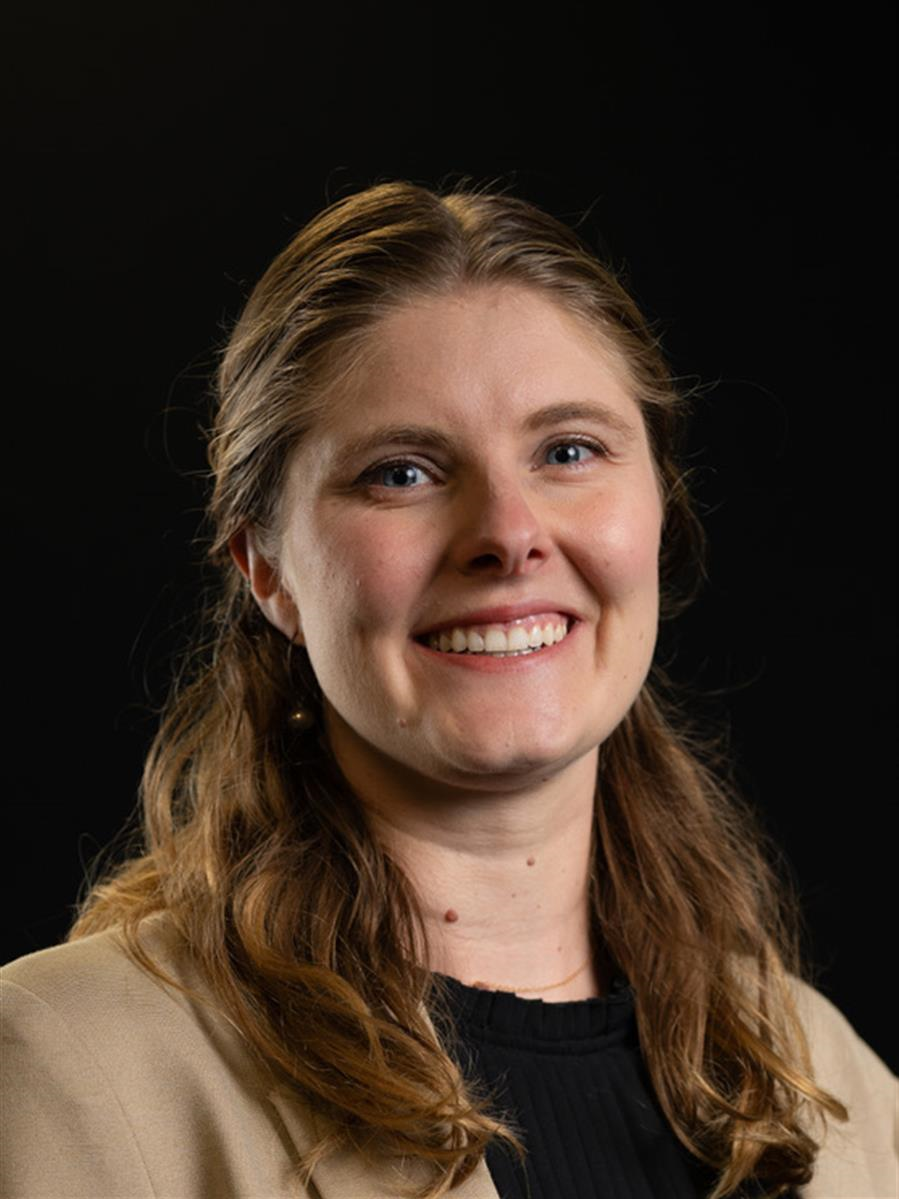
Ishi Keenum, assistant professor at Michigan Technological University and the project's lead investigator. Courtesy Photo.
Supported by a Research Universities for Michigan (RU4M) Livable Futures Water Collaboration Grant, Michigan State University (MSU), Michigan Technological University, the University of Michigan (U-M), and Wayne State University are field-testing a new portable instrument called Bactiquick which could change the way the state monitors its shorelines.
15-minute onsite detection
Ishi Keenum, assistant professor of Civil, Environmental, and Geospatial Engineering at Michigan Tech and the project’s lead investigator, explained that Bactiquick provides on-site results in just 15 minutes, offering a faster, more flexible alternative to laboratory beach water quality testing.
“This grant is something where each of the four R1’s in Michigan came together so we can really kind of show our strengths,” Keenum said. “Our goal is to implement this new tool on the market called Bactiquick, which uses a different type of detection [than culture and molecular testing methods].”
While older methods require waiting up to 24 hours for live bacteria to grow in a lab, Bactiquick acts like a chemical sensor. It detects endotoxins found in the cell wall of Gram-negative bacteria, including major pathogens like E. coli, Salmonella, Shigella, and Pseudomonas. In beach water, a positive test could signal sewage or agricultural runoff, or a buildup of Pseudomonas, which naturally thrives in wet environments.
Statewide Bactiquick testing
To ensure the tool will work with diverse water samples, the researchers are testing it in different regions throughout the state. This is important as water conditions (cleanliness, bacterial growth, temperatures) vary for Michigan beaches depending on location.
“In lower Michigan or downstate, you’ll see fecal loading or beach closers happen much earlier in the summer,” Keenum said. “In Upper Michigan, they happen much later, and that has to do with temperature.”
Public health epidemiologist, Marisa Eisenberg, (School of Public Health, U-M) is analyzing 20 years of historical beach and weather data provided by EGLE to predict when closures will most likely happen.
Another of Keenum’s RU4M colleagues, water microbiologist Nishita D’Souza, (Department of Fisheries and Wildlife, MSU) is working with the Oakland County Health Division (OCHD) to pilot an intensive, five-day-a-week testing schedule across 12 sites.
“We specifically selected 12 sites that are known to be problematic from their 250 sites, so we’re really challenging the device with historically difficult sites,” D’Souza said. “Right now, we’re testing six weeks in the summer, five days a week, and doing a combination of Bactiquick, Colilert—which is the culture method—qPCR and Digital PCR.”
D’Souza and the OCHD are running the four methods simultaneously to validate the applicability of Bactiquick by showing how its 15-minute results match up with established lab methods like Colilert and PCR.
Professor Jeffrey Ram (Department of Physiology, Wayne State University) and his lab are looking into sites in Wayne County, while Keenum partners with Lake Superior State University to test Bactiquick on beaches in the Sault Ste. Marie area.
“The diverse water environments enable us to test the instrument over a range of water quality and sources, from pristine waters of Lake Superior to watersheds in southeast Michigan that have been areas of concern for decades,” Ram said.
Expanding beach testing with citizen science
Michigan’s 45 local health departments regularly monitor around 400 beaches each year, leaving the other two-thirds without routine testing.
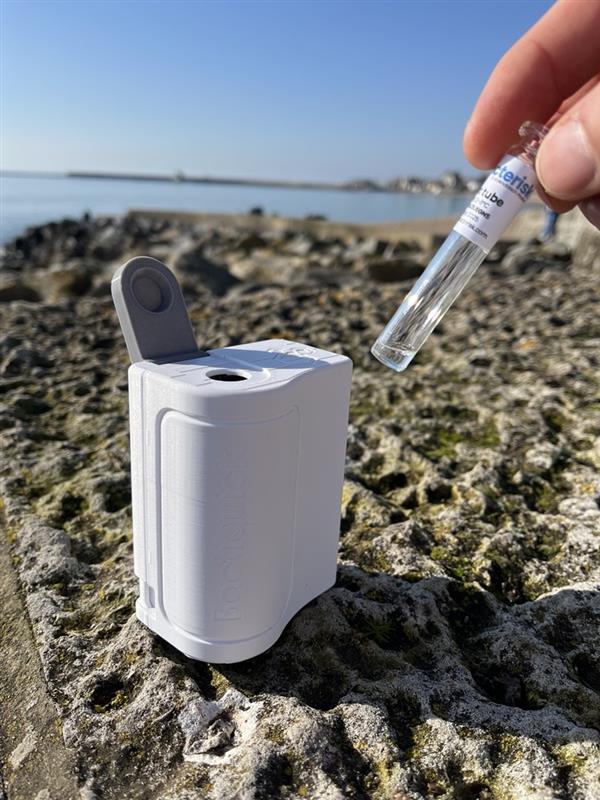
Bactiquick test kit. Photo Credit UK WaterSafe.
A major component of the RU4M project is showing that Bactiquick can easily be used by anyone. Community participation in beach monitoring could increase the number of beaches that are regularly tested and decrease the risk of microbial contamination.
Keenum stated that because the tool is relatively inexpensive and doesn’t require a high level of technical training, “our long-term vision might be seeing if you can train citizen scientists or even lifeguards to do some of this beach testing.”
Ram is currently working with a citizen group to test the usability of Bactiquick by non-scientists. D’Souza stated that both students in her lab and student interns with Oakland County are using the tool.
Toward proactive beach safety
The RU4M Bactiquick project demonstrates the power of community-engaged science and the necessity of networks like MiNet in solving some of Michigan’s most pressing water challenges. As Ram noted, the four project leads complement one another with skills ranging from data integration and software development to hands-on user training and bacterial identification.
By combining these skills, the researchers hope to shift water safety from a reactive process to a proactive system.
“Success means delivering a field-usable, rapid detection technology that the EPA will approve for testing beach safety,” Ram said, emphasizing that “developing a 15-minute portable test will revolutionize how we protect public health.”
Following summer testing, the Bactiquick assessment team will attend the National Beach Summit in Traverse City, Michigan to share insights and gather feedback for the next phase of the study.
Story by Aja Witt