
Published August 26, 2026
Experts in water research and local decision-makers gathered at the Kellogg Hotel and Conference Center in East Lansing, Michigan on Aug. 4, 2026, for the Research Universities for Michigan (RU4M) “Where Land Meets Water” workshop. Hosted in collaboration with the MSU Water Alliance, and led by MSU associate professor and Aquatic Ecology hub co-lead Ethan Theuerkauf, the event addressed the challenges facing Great Lakes shorelines, and how Michigan communities can better transition toward long-term coastal resilience.
The workshop began with a stakeholder panel discussion on obstacles in policy and governance surrounding shoreline management in the state. Speakers included Lara Bender, an environmental protection specialist with the National Park Service; David Bunte, Chikaming Township Supervisor; Leah DuMouchel, director of Programs and Communications for the Michigan chapter of the American Planning Association; and Marcy Hamilton, Deputy Executive Director of the Southwest Michigan Planning Commission.
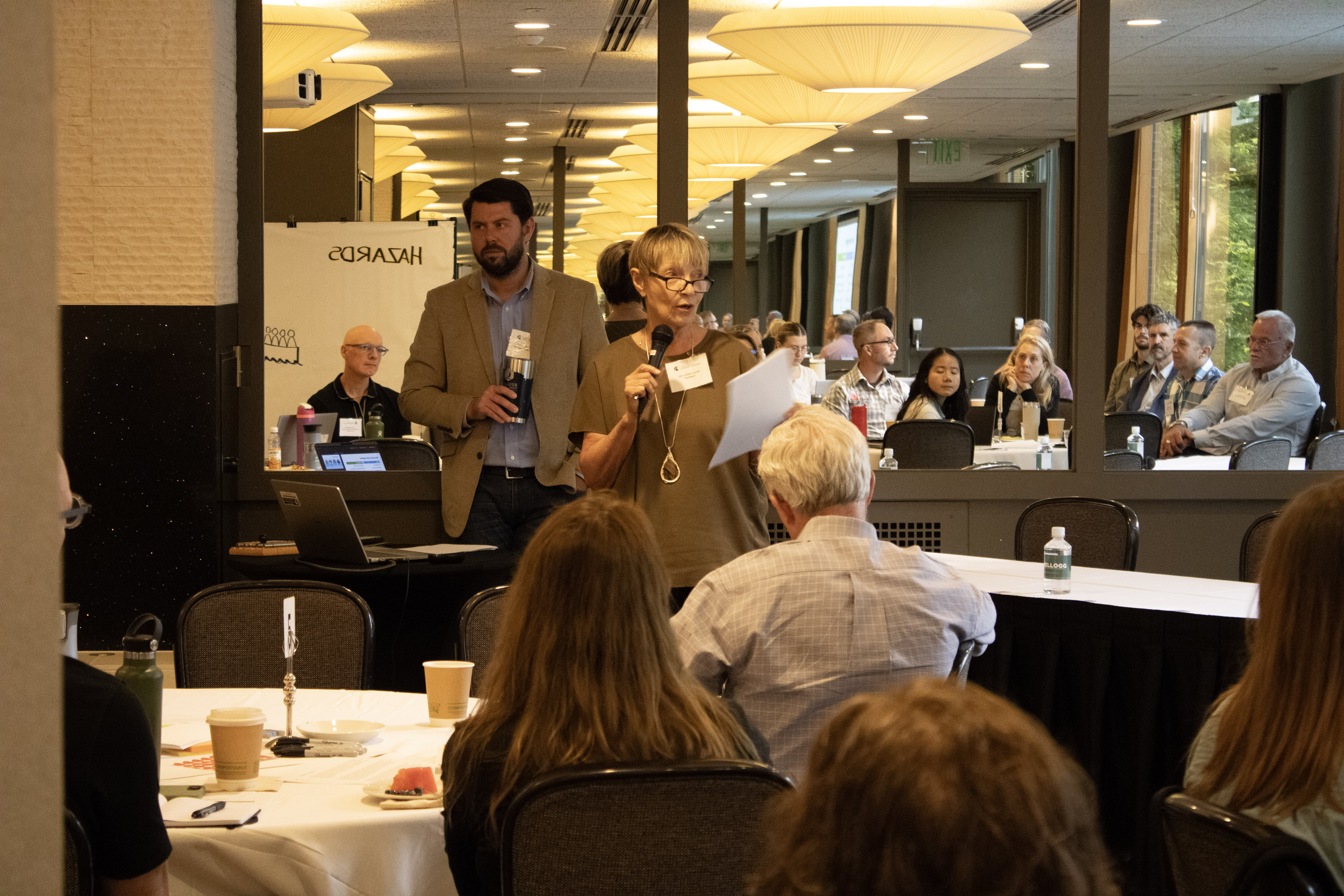
External Consultant Jan Urban-Lurain and MSU Associate Professor Ethan Theuerkauf lead discussions at the RU4M “Where Land Meets Water” workshop.
Several speakers emphasized how technical solutions, like shoreline armoring and seawalls, or building and replacing infrastructure, are only as effective as the policies and community buy-in supporting them.
DuMouchel explained, “the biggest thing that planners can do to address hazards like flooding is to change the way we think about where we put our investment,” referring to community investments in infrastructure, development, and other long-term projects. This could include building homes or neighborhoods in flood-prone areas or developing waterfront businesses.
She explained that planners have historically put their investments anywhere they want, believing they can “solve nature” or engineer their way out of problems driven by climate instability.
DuMouchel later stressed the importance of thinking differently when it comes to planning to better understand how we can work with what water is naturally going to do.
Bunte shared in the practical realities of managing changing coastlines, having been through the “great flood of 2019 and 2020” along the Michigan coast. He discussed Chikaming Township’s approach to shoreline sustainability which includes the integration of dedicated coastal management sections in local master planning, and utilizing educational toolkits developed through academic partnerships.
The second panel featured scientists who provided data on shoreline erosion, the transport of coastal sediment, and predictive modeling. These speakers included Brian Majka, a restoration ecologist with GEI Environmental; Dr. Richard Norton, a professor of urban and regional planning at the University of Michigan; Dr. James Selegean, a hydraulic engineer with the U.S. Army Corps of Engineers, Detroit District; and Dr. Lucas Zoet, a professor of geoscience at the University of Wisconsin-Madison.
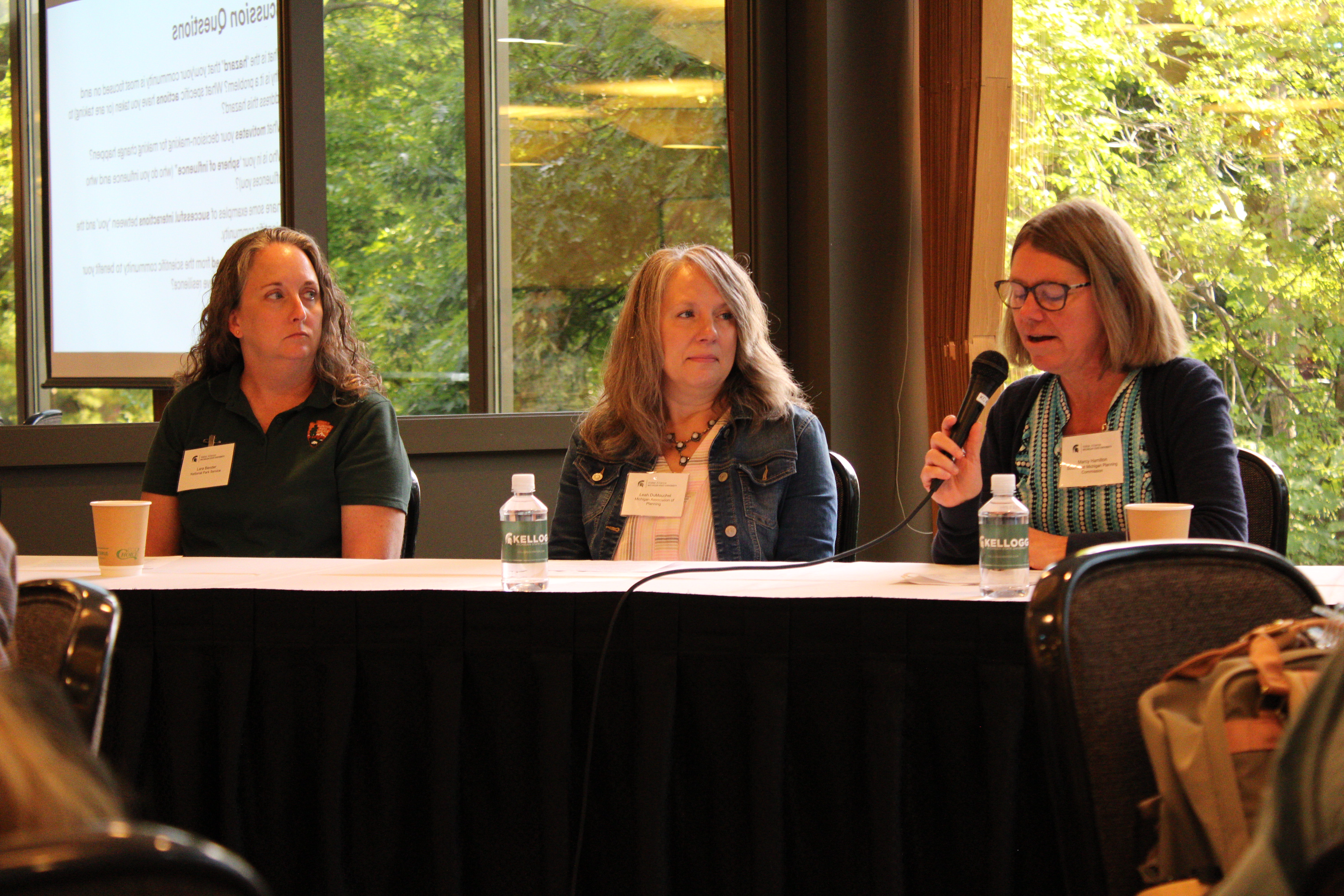
Lara Bender, Leah DuMouchel, and Marcy Hamilton discuss obstacles surrounding shoreline management in the state.
This panel addressed the physical processes that have contributed to changing Great Lakes coastlines.
Selegean expressed a desire to influence property owners along the shoreline, detailing how artificial structures (armoring, seawalls) can disrupt the natural movement of sediment, and how armoring can reduce the sand that’s available for neighboring shorelines, potentially contributing to increased erosion elsewhere.
“Everyone’s actions are having an effect on each other,” he said. “We all want a beach. Once you armor, your beach goes away.”
Following the panels, attendees moved into breakout sessions to discuss “what’s at stake”, identify coastal hazards, and define what is meant by “coastal resilience”.
Via small group discussion, coastal resilience was identified as the ability of coastal communities, ecosystems, and infrastructure to adapt to changing shoreline conditions while reducing recurring hazards. Participants emphasized the importance of understanding shoreline dynamics, adopting adaptive approaches like living shorelines, and balancing the protection of people, property, and coastal ecosystems.
The “Where Land Meets Water” workshop was the third installment of a four-part “Co-creating MI Water Resilience” series. It built on discussions from the “Water Quality” workshop at Wayne State University in May, and the “Water Quantity” workshop at Michigan Technological University in July.
The University of Michigan will host a “Water Resilience” summit on Oct. 6, 2026, to conclude the series.
Story by Aja Witt